Experiences
The experiences component is used to list personal experiences that players can invoke for bonuses. Each experience is a short story hook plus an optional modifier (like +2) that players can apply when it meaningfully impacts a roll.
You can use it for:
• Character backstory moments that grant bonuses.
• Session‑earned experiences and scars.
• GM‑granted flags that invite specific kinds of play.
Each experience row shows:
• A name (or short title).
• A note describing what happened or how it matters.
• A bonus value (like +2) to apply when used.
• A helper line reminding players how to use experiences at the table.
The block intentionally does not encode which rolls an experience applies to; that stays a conversation between player and GM.
Example – Experiences list
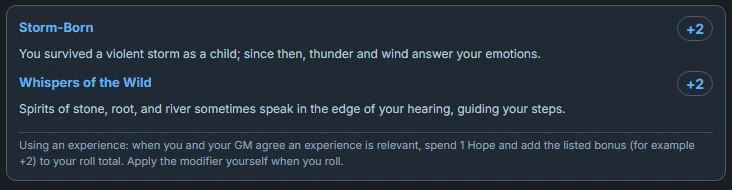
```experiences
styleClass:
items:
  - name: "Storm-Born"
    note: "You survived a violent storm as a child; since then, thunder and wind answer your emotions."
    bonus: +2

  - name: "Whispers of the Wild"
    note: "Spirits of stone, root, and river sometimes speak in the edge of your hearing, guiding your steps."
    bonus: +2
```
When rendered:
- Each entry becomes a row with the name, note, and a
+2(or similar) badge. - A helper text at the bottom explains: spend 1 Hope and add the listed bonus when you and the GM agree an experience is relevant.
Example – Single experience at root
For a quick one‑off experience, you can omit items and define a single item at the root:
```experiences
styleClass:
name: "Storm-Born"
note: "You survived a violent storm as a child; since then, thunder and wind answer your emotions."
bonus: +2
```
Example – Map style items
You can also define experiences as a map instead of a list:
```experiences
styleClass:
items:
  river:
    name: "Storm-Born"
    note: "You survived a violent storm as a child; since then, thunder and wind answer your emotions."
    bonus: +2

  void:
    name: "Whispers of the Wild"
    note: "Spirits of stone, root, and river sometimes speak in the edge of your hearing, guiding your steps."
    bonus: +2
```
Functionally this is the same as the list version; the keys (river, void) are just for organizing your YAML.
Configuration
Top‑level experiences block options:
| Property | Type | Default | Description |
|---|---|---|---|
styleClass | String | none | Optional CSS class applied to the entire experiences block container (alias: class). |
items | Array or Object (map) | [] | List or map of experience items. |
name | String (root single) | "Experience" | Name/title when defining a single experience at the root. |
note | String (root single) | "" | Description text for a single root experience. |
bonus | Number / String | +2 | Default block‑level bonus when defined at the top; per‑item bonus overrides this. |
Experience Item
Each entry under items (in either array or map form) is an object:
| Property | Type | Description |
|---|---|---|
name | String | Main title for the experience (e.g. "Saved by the Stranger"). |
title | String | Alias for name; used if name is not provided. |
label | String | Another alias for name; useful when migrating older notes. |
note | String | Description text of what happened or how this experience matters. |
description / summary | String | Aliases for note; first non‑empty value is used. |
bonus | Number / String | Modifier value for this specific experience (e.g. +2 or -1). Overrides the block default. |
Behavior details:
bonusis parsed from either a number (2,-1) or a string ("+2","3").- If an item has no
bonus, it uses the block‑level default (which is+2unless overridden). - Text fields (
name,note, etc.) are rendered as plain text, not Markdown, to keep the layout simple and consistent.
At the table, this gives players a clear, compact list of experiences and exactly what they’re worth when invoked, while keeping the role‑play and negotiation about when they apply front and center.